
The Priory of the Immaculate Conception
Updated: Mar 19
Chapel Restoration and Mural Conservation, Washington D.C. (Project Manager and Lead Conservator, executed with John Canning Co.)
Challenge
The primary challenge involved the multi-staged restoration of a complex sacred environment featuring diverse materials, including elaborate wood carvings and historic murals. The goal was to unify these elements by reversing years of degradation and reinstating original patterns to honor the chapel's spiritual purpose.
Technical Solution
A multi-phased approach was applied to treat the various artistic mediums within the sanctuary:
Wood Altar Treatment: The main carved wood altar was carefully stripped of old, degraded finishes and refinished with a new protective layer, featuring precise gold leaf accents applied to the intricate carvings.
Mural and Pattern Reinstatement: The Sanctuary Wall murals were conserved through specialized cleaning and stabilization, and the background pattern was meticulously reconstructed to more closely resemble the original design.
Panel Painting Restoration: Fourteen historic panel paintings depicting the story of St. Dominic were conserved and restored, ensuring the narrative cycle was returned to its original aesthetic glory.
The Result and Images
The multi-phased project successfully revitalized the chapel of the Dominican House of Studies. The restoration of the woodwork, the precision of the gold leaf accents, and the recovery of the original mural patterns combined to restore the sanctuary's intended visual and spiritual impact.
Sanctuary Wall
canvas reattachment. Applying pressure while injected adhesive is allowed to dry

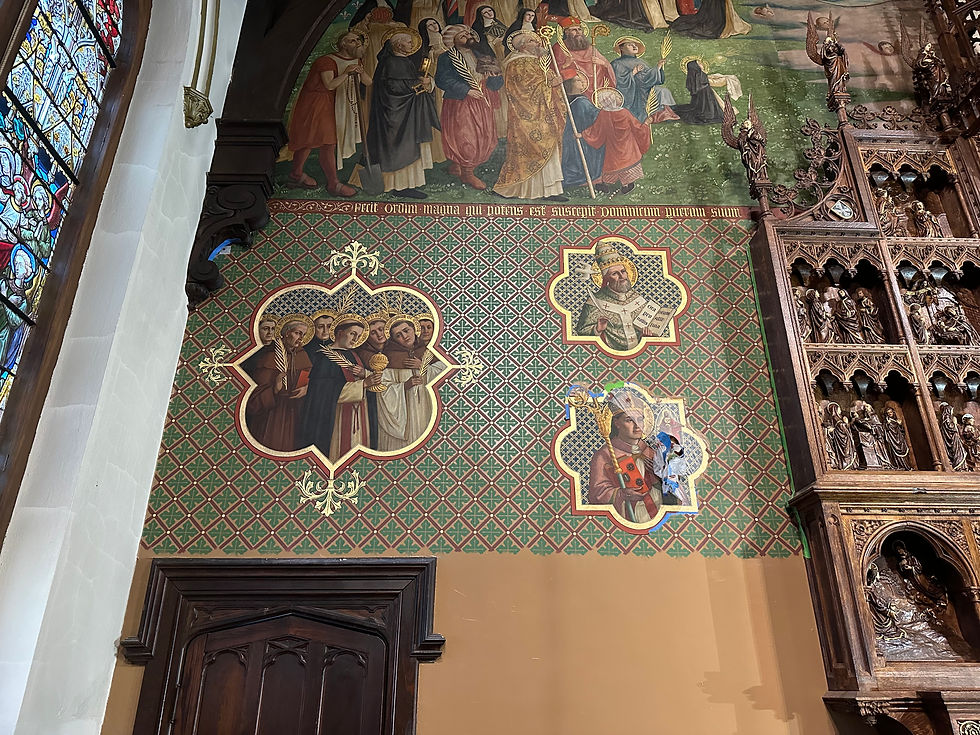
Left side of sanctuary wall after application of stencil design
sanctuary wall before conservation treatment
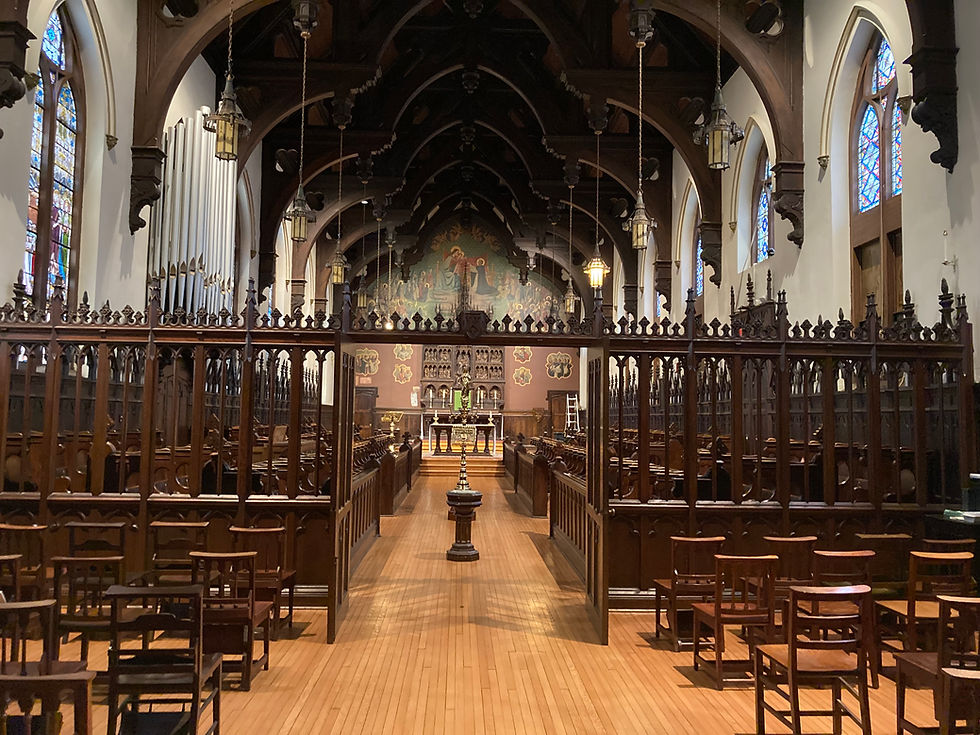
Santuary wall after conservation and restoration treatment
Santuary wall after conservation and restoration treatment
The murals on the sanctuary wall and side panels were oil on canvas. Both were mounted onto a structural support. The main altar murals were mounted on a plaster substrate while the side panels were mounted onto the glass windows of the chapel. The varnish removal of the side panels proved to be tricky, but once the right combination of chemicals were found, the varnish layer was able to be removed using a combination of chemical and mechanical removal techniques.
Side wall Panels
Before Conservation treatment

After conservation treatment

Before Conservation treatment

After conservation treatment

Before conservation treatment

after conservation treatment

Before conservation treatment

After conservation treatment

Exposure windows were also opened up on the sanctuary wall in order to find the original design of the background for the murals. The original background was painted over several times over the years. The idea for the background was to restore the area and not conserve, so more liberties were taken in the creation of the new design. The final design established became a combination of the older design elements with some new ones to create a more overall cohesive design for the space.
Treatment Methodology:
Tests were performed in order to ascertain the best methodology for the vanish removal for the murals. Exposure windows were opened to allow us to understand the original designs and details of the decorative elements present within the sanctuary wall. Some new designs were created and incorporated further expanding the original design over the entirety of the wall. Areas of damage were stabilized, cleaned and re-adhered to the wall surfaces. All areas of loss were infilled mimicking the original textures and an isolating vanish was applied to further consolidate and isolate the original work from any new work done on its surface. Finally, the murals were inpainted to match original work
“All work accomplished follows the Secretary of the Interior”s “Standards for the Treatment of Historic Properties” and the American Institute for the Conservation of Historic & Artistic Works (AIC) standards


Comments