
Hale Library of Kansas State University, Manhattan, KS
Updated: Mar 19
Mural Restoration and Conservation, Kansas State University (Project Manager and Lead Conservator, executed with John Canning Co.)
Challenge
The primary challenge was the extensive damage to five historic murals following a severe roof fire in 2018. Prolonged exposure to water, smoke, and falling debris—compounded by the murals remaining vulnerable to the elements during the library's reconstruction—required a complex, phased stabilization strategy before the full extent of the damage could even be assessed.
Technical Solution
Environmental Stabilization: A temporary protective shell was constructed around the four historic Overmyer oil-on-plaster murals to shield them from the outside elements and construction debris while the building’s structural restoration was underway.
Monitoring and Documentation: Since the full impact of water infiltration could only be determined once the walls were completely dry, periodic technical examinations were conducted to monitor the murals' condition and prevent further deterioration.
Off-Site Studio Conservation: The "We are the Dream" mural, a latex-on-burlap piece created by the student body, was carefully and completely removed from the wall to undergo specialized restoration within a controlled studio environment.
The Result and Images
The proactive stabilization and tailored conservation approach successfully rescued these vital cultural assets from total loss. By shielding the on-site murals during the library’s structural recovery and restoring the student-led artwork in the studio, the project ensured the survival of Kansas State University's artistic legacy despite extreme environmental threats.
Treatment Methodology:
Once the moisture levels of the wall were lowered and the murals seemed stabilized, tests were conducted to determine the best means and methods for treatment. All flaking paint was stabilized, cleaned and re-adhered to the plaster surface. All previous repair work was removed and any plaster loss was infilled with matching texture. The “We are the Dream mural on burlap was surface cleaned, all debris from the back of the burlap was removed and areas of burlap loss repaired. All of the flaking paint was stabilized, and areas of loss were infilled. An isolating vanish was applied to further consolidate and isolate the original work from any new work done on their surface. Finally, the murals were inpainted to match original work and a final varnish was applied to make the finish homogenous aesthetically.
Removing all debris and adhesive residue from the back of the canvas

Flaking paint and canvas delamination
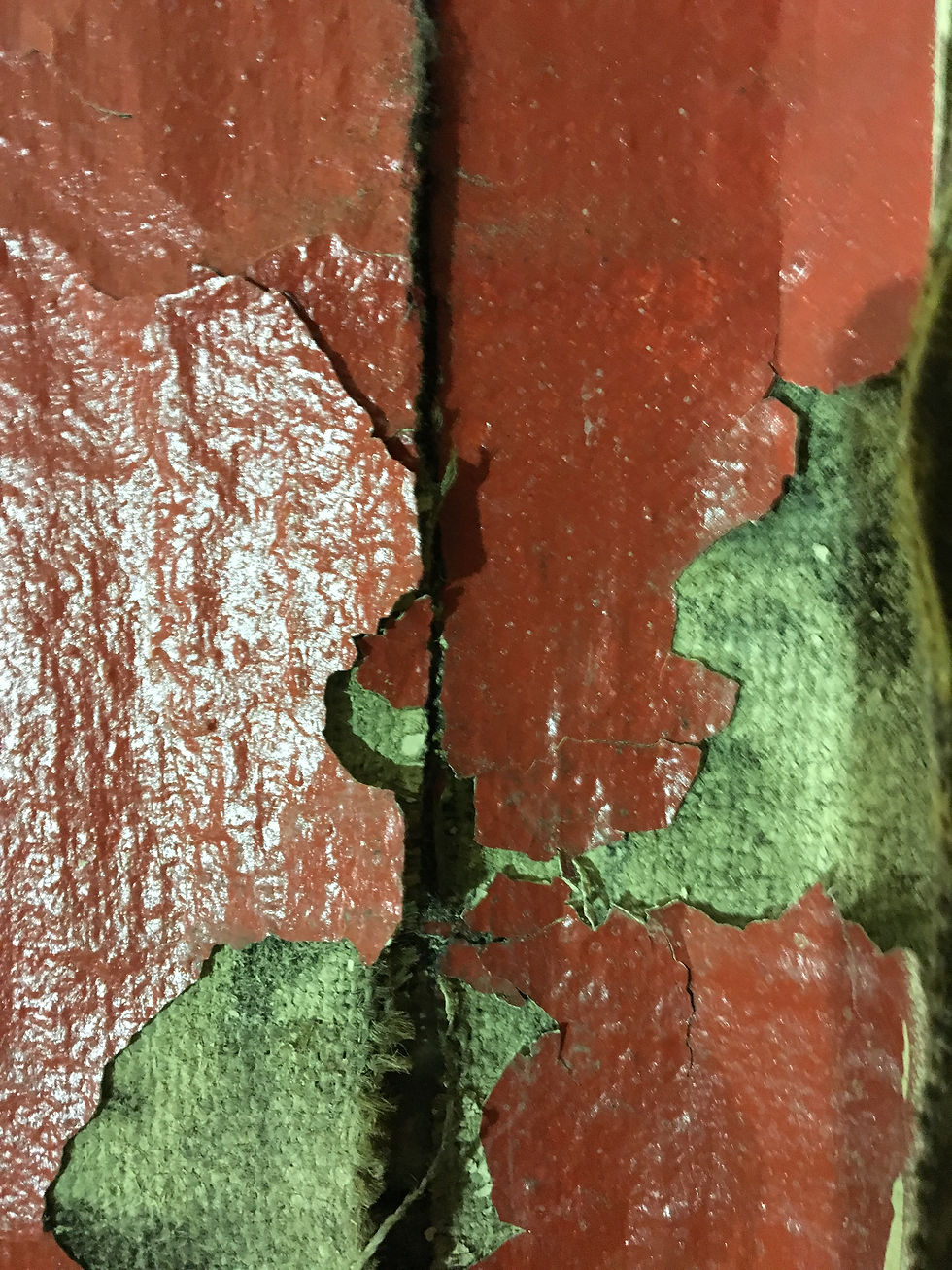
Canvas repairs and reinforcement of edges

Canvas repairs

Overall of mural after conservation treatment


All work accomplished follows the Secretary of the Interior”s “Standards for the Treatment of Historic Properties” and the American Institute for the Conservation of Historic & Artistic Works (AIC) standards
Agriculture
Detail of mural, example of the water damage

Detail of mural, drip marks from the stained wood of the ceiling caused by water damage

Detail of mural after conservation treatment

Detail of mural after inpainting
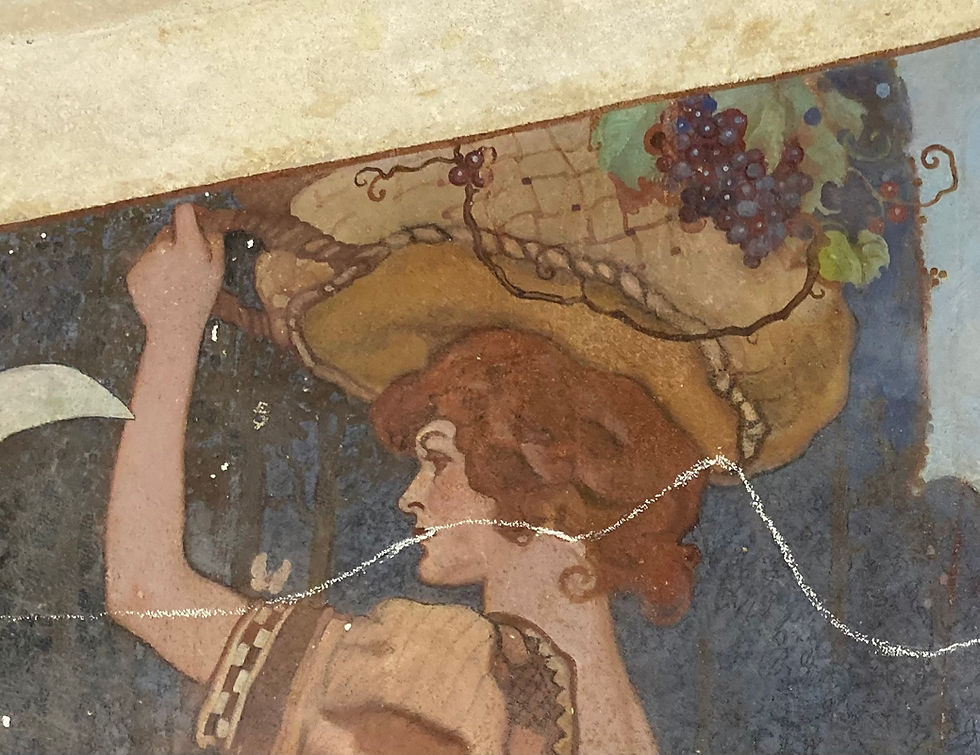
Overall of mural after conservation treatment

Home Economics
Detail of mural during conservation treatment

Detail of mural before inpainting procedure

Detail of mural during inpainting procedure

Detail of mural after inpainting

Overall of mural after conservation treatment

Science and Industry
Example of a plaster distortion. The plaster layers began to delaminate from each other

Example of efflorescence arising from the water damage

Overall of mural after conservation treatment

The Arts
Example of the extent of the water damage

Paint layer discoloration

Detail of mural before inpainting

Detail of mural after inpainting

Overall mural after conservation treatment
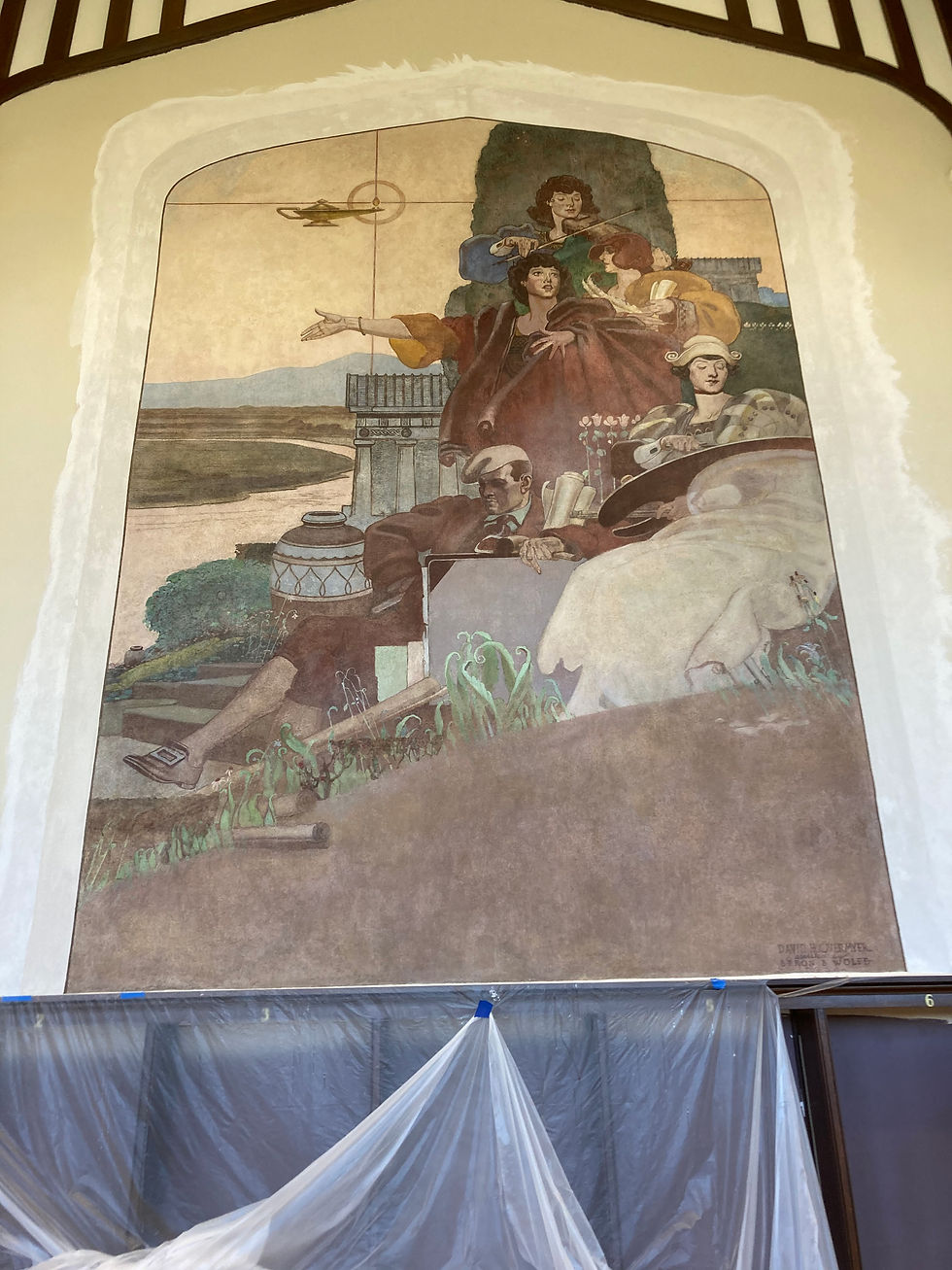
“All work accomplished follows the Secretary of the Interior's “Standards for the Treatment of Historic Properties” and the American Institute for the Conservation of Historic & Artistic Works (AIC) standards


Comments